
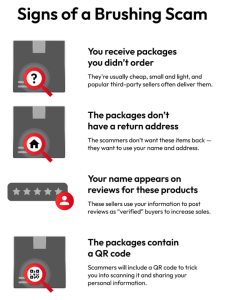
Imagine this: a package arrives at your door. You don’t remember ordering anything, but curiosity gets the better of you, and you open it. Inside is something random—maybe a cheap keychain, a phone case, or even an empty box. At first, you might laugh it off as a mistake or even a lucky freebie, but what you’ve experienced is likely part of a growing scheme known as a brushing scam.
 Brushing scams have become increasingly common in the world of online shopping, where competition is fierce, and sellers are constantly vying for visibility. These scams involve third-party sellers sending unsolicited packages to random recipients. Why? Because e-commerce platforms rank products higher based on sales volume and positive reviews. Scammers exploit this by creating fake customer accounts, “purchasing” their own products, and shipping out packages to real addresses to make the transactions look legitimate. The name originates from the idea that the scammers are “brushing up” the reputation of a product or seller (albeit not necessarily themselves).
While this may seem like a harmless ploy to boost rankings, brushing scams are far from benign. At the heart of the scam lies a breach of your personal information. If you’ve received one of these mysterious packages, it means your name and address have been compromised. This information may have been leaked in a data breach, scraped from public directories, or even misused after a legitimate online purchase from an untrustworthy seller. The risks of brushing scams go beyond just receiving unwanted packages as your personal data could be exploited for other fraudulent activities, such as creating fake accounts or making unauthorized purchases in your name.
So how do you protect yourself?
 First, take steps to secure your personal information. Avoid needlessly sharing your address publicly, when possible, use strong and unique passwords for your online accounts, and monitor your email and bank statements for unusual activity. If you receive a package you didn’t order, don’t “brush” it off. Report the incident to the e-commerce platform and shipping carrier. Additionally, it’s crucial to remain vigilant. Suspicious packages often come with vague or incomplete sender details and contain low-value items. If you suspect foul play, file a report with your local consumer protection agency or the Federal Trade Commission (FTC). You should also check your credit report to ensure your identity hasn’t been misused.
Brushing scams highlight a broader issue: the growing misuse of personal information in the digital age. While receiving unexpected packages might seem like a small inconvenience, it’s a symptom of a much larger problem. Taking steps to secure your data and promptly addressing suspicious activity can help protect you from falling victim to this increasingly common scam.
So, the next time an unmarked box shows up on your doorstep, think twice before you dismiss it as a simple mix-up. Behind that package could be a scheme designed to exploit your information—and your trust.